Tuesday, 24 September 2013

Raising awareness

As I start to write this, I'm sitting behind the BRACE table at a business exhibition at Bristol City's stadium. The fact that I'm writing my blog instead of coping with enquirers crowding three deep round our table will tell you that it's a bit quiet at the moment. However, the conversations we had earlier have already made this exercise worthwhile.

This is all part of "raising awareness". Awareness of dementia and the potential of scientific research, awareness of BRACE and its part in this work. It's an essential activity for a fundraising charity. The simple and often urgent thought process in fundraising is a straight line from a problem to a potential solution... and therefore the need for money or gifts in kind.
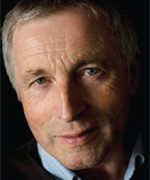
Next week we are attempting something more ambitious. We have organised a major debate about dementia, hosted by the University of the West of England and chaired by Jonathan Dimbleby. We have a heavyweight panel, with great knowledge of science, medicine, public policy, care management and the experience of supporting a loved one with dementia. There will be scientists, clinicians and many others with valuable expertise in the audience.

What we are hoping to achieve is a discussion both wider and deeper than is normally possible at gatherings concerned with dementia. It is unusual to find such a diverse range of skills and perspectives in such a public setting.

Public? Ah, that reminds me. As well as the 250 people in the room, we shall be sharing the debate with you and anyone else who wants to watch online. The webcast will be made available through our Facebook page and you can join in on Twitter.

Date: Thursday 3rd October  Time: 7pm (19:00 BST)

Thursday, 5 September 2013

Publishing time again


Where will you find a world class violinist, a former band member with Lennon and McCartney, one of the UK's best known broadcasters and news of a potential Alzheimer's treatment? In the BRACE Newsletter, of course!

We publish our Newsletter just twice a year, and I always look forward to the week when that happens. The spring issue comes out in the first week of April and the autumn issue in the first week of September.

It takes a lot of work to get to this point, of course, and I am hugely grateful to volunteer editor Emma Stevenson and designer Lesley Hill from MammalCreate for all their hard work and skill. The material they work with is provided by the BRACE staff team, the scientists and many of the supporters we thank in the pages of the Newsletter itself.

Getting the balance of the Newsletter right is not a simple task. To cut a very long story ridiculously short, we have a mixture of scientific research stories to inform readers about some of the progress being made, and fundraising stories to inspire others while thanking people who have done particularly remarkable things or raised a lot of money.

You can read it online or email us if you want a paper copy posted. We also have a new Research Update, focusing this year on clinical research and can send a copy by post or email.

Friday, 16 August 2013

Helping one another

I’m indebted this week to another blogger, Hilary Douglas-Smith. Hilary’s blog is radically different in purpose from mine, because it supports young mums in the Bishopston area of Bristol. This might not seem the most obvious association for a dementia charity, but please read on!

aiding,backpacks,cartoons,climbers,gestures,helping hand,hikers,leisure,people,recreation,Screen Beans®,sportsBRACE works all the time with community groups and local businesses. It helps us get our message out and about – face to face, on paper or online. When I met Hilary to discuss ways we could help one another in and around her part of Bristol, I discovered that she had worked for the Alzheimer’s Society and knows a lot about supporting people with dementia and their families. She wrote out some useful advice for anyone thinking of setting up a support group for carers. It’s a bit long to paste straight into my blog but, if you’d like a copy, just email me and I’ll send it to you. 

We are a dementia research charity, of course, and people looking for advice on care and support will generally turn to the Alzheimer’s Society. However, we have a useful page of wide ranging links on this site, and we know that this helped people urgently seeking help and advice about coping with dementia in the family. While our charitable aims are very clearly defined, we’re happy also to be a hub for people looking for information about other aspects of the struggle with dementia.

So thank you, Hilary, for helping us to help others.

Saturday, 10 August 2013

Definitely not boring!

I blogged a few weeks ago about one of our most resilient supports, Jo Earlam, who is herself a blogger. She writes about her remarkable effort to complete 50 marathons by the time she reaches 50 in 2015. Her running is her fundraising, which is where BRACE comes in, but the running and blog are both about so much more.

It seems that Jo’s blog has attracted what she calls her “first heckler”. The heckler wrote, “Better to let the whole world think you are boring, than to write a blog and prove them 100% right.”

Okay, it was pointlessly unkind and, as far as I am concerned, complete rubbish. However, it did give me pause to think about what is interesting in fundraising and the related news which charities publish.

The blunt fact is that most fundraising events are not interesting to read about. You wouldn’t want to read a blow by blow account of a volunteers’ coffee morning unless, of course, it all went horribly wrong in hilarious fashion, as if scripted by Alan Ayckbourn. You might be impressed by someone’s efforts in an urban marathon, but you wouldn’t read several hundred words about paving stones, pedestrians and pigeons.
What makes their efforts interesting is that they are part of a bigger story, perhaps several bigger stories. People who raise funds for BRACE usually do so because their lives have been cruelly touched by dementia and they want to fight back. It’s their stories, not the making of cakes or the abseiling down the office block, which people want to read about. When they team up with BRACE, their stories intersect with a broader human story about what dementia does to ordinary lives and how we are trying to lift its curse.
We put Jo on the front of our Newsletter after her first marathon for BRACE, not because she had raised money for us, but because she had a story to tell. The how became the why and the who, and every volunteer, fundraiser and donor would have recognised something of themselves in what she wrote.

People who send us their stories and photos after their fundraising is completed give us help above and beyond the money they add to our research fund. They help other people understand why they do what they do and why it is that beating dementia matters to ordinary people everywhere. They give us colour and humanity, and we relate so much better to these warm qualities than to scientific words signifying proteins and processes in the brain.

More generally, what makes human beings interesting and remarkable is their ability to take the ordinary and do something extraordinary with it. Our volunteers take cake making and long distance running and turn them into research funds. They often take personal grief and turn it into hope for others. I think of it as a sort of alchemy, and it’s definitely not boring. 

Monday, 22 July 2013

Echoes of dementia

For me, like many people, a holiday is an opportunity to enjoy some reading without all the usual distractions and disruptions. For our family holiday this year, just finished, I had been saving the latest novel by one of my favourite authors, Khaled Hosseini. This was the recently published And the Mountains Echoed. Hosseini’s previous works are The Kite Runner and A Thousand Splendid Suns.

It shouldn’t surprise me that a holiday and a darn good novel is no refuge from the subject of dementia. This book has a rich cast of characters and it will not ruin anyone else’s experience of the story if I mention here that one of them develops dementia. The novel takes in three continents and a period of more than 60 years, so I’m not giving much away. The book is about much wider issues in relationships, and I am not pretending that dementia is a major theme, but its impact on one person and the immediate family is important in drawing together the threads of the story.

This is yet more evidence of dementia growing in our collective awareness, in literature, drama and other cultural forms. What is more interesting, though, is the way a writer treats the subject. Khaled Hosseini does so with sensitivity and subtlety, his knowledge of the subject perhaps reflecting his medical training. The impact of the dementia in this story has as much poignancy as in any other writing I know of, perhaps more because of its context in the longer story, but I believe Hosseini’s approach belongs to a newer trend in the way we write and talk about dementia.

It seems to me that the conventional approach to dementia, once it became possible to write about it explicitly at all, has been to emphasise the hopelessness of the condition. People with dementia are generally portrayed as confused, at risk to themselves and living in a world of deepening darkness. Some more recent writing, including this novel, seems to moderate that picture with a sense that the gloom is neither total nor immediate. In Hosseini’s depiction of the condition, the sufferer continues to have a close relationship with a daughter and a neighbour and some enjoyment of simple pastimes such as television. When a care home finally has to be considered, it turns out not to be the stereotypical home full of “old women, with ruined faces and whiskers on their chins, dribbling, chattering to themselves, glued to television screens”. There is in a nod – brief, but of great significance to the story – to the practical benefits of diagnosis, the knowledge that “I must wade into the waters, where I will soon drown”.

It’s not cheerful, not the stuff of “feel good” fiction. However, it recognises the difference between utter darkness and gathering twilight.  Awareness of dementia includes understanding that it is not a single, predictable experience and that life does not end at the moment of diagnosis.  As with other forms of suffering in this novel and Hosseini’s other novels, redemption lies beyond the pain and not in its undoing.

Perhaps I am being unfair to older literature or perhaps I am just smitten with Khaled Hosseini’s work. And perhaps you have an alternative view which you would like to outline in the comments box below.

Wednesday, 26 June 2013

A little extra help

When people volunteer to help a charity, they might imagine themselves standing behind a sales table, doing something mad for sponsorship or stuffing newsletters into envelopes.

A lot of volunteering for BRACE is done, not in the BRACE office or at the charity’s own events, but within groups to which the volunteer already belongs. This could mean a business, school, college or church, for example, which has made BRACE its supported charity.

In the past week, we have gained greatly from little bits of extra help from two people who belong to groups which have supported BRACE in the last year, and I would like to thank them.

First, there was Ali, who works for IOP Publishing, big supporters of BRACE in 2012. She offered to carry on volunteering for us, and spent a day in the office this month. Out of this came a conversation about the fact that it was so difficult for people to sign up to follow my blog. Well, I like to think that’s the only reason I don’t have more followers.

Ali found that I was missing a simple trick, in that BlogSpot provides a gadget or widget or something which creates a much simpler sign up option. Anyway, with Ali’s help, I installed it and then changed the layout of the blog so readers could actually see the sign-up box without having to prod the margins of the screen with the cursor.

Then there was another problem which has dogged us for even longer. We set up our Facebook page in 2009 and it has never been visible to searches within Facebook or Google searches on, say, brace + facebook. You had to know the URL to find it or navigate there from our website.

This has baffled us. Over time we have asked an SEO expert and various social media clever clogs to help us, all to no avail. Until yesterday, that is, when the new president of the Medical Science Society at UWE, a student society supporting BRACE for the third year running, came in to introduce herself. I don’t know how it came up in conversation, but Sofi said she thought she might know what to do. A few minutes later – bingo!

Thank you Sofi, thank you Ali. These look like small contributions to our work, but they could be very big. Who knows how much of a difference they could make to our visibility and, as a result, the resources we could bring in future to dementia research?

Just a small reminder that you don’t need a fat bank account, hours and hours of spare time or a doctorate in biochemistry to make a worthwhile contribution to fighting dementia.

Thursday, 13 June 2013

Jo just doesn’t stop

I like writing about our more remarkable supporters, and Jo Earlam is certainly in that category.

Jo ran the London Marathon for us last year but it wasn’t her first marathon and she didn’t exactly stop at the finishing line. She has set out to run 50 marathons before she reaches the age of 50 in 2015, which is a pretty tall order. From recent correspondence, I know that she has been running in Devon and Barcelona among other places this year.
Not the finishing line yet!


The image that springs to mind is Forrest Gump running unstoppably across the USA and back again. There are lots of obvious differences, of course, not least that Jo has a serious purpose in raising funds for dementia research, taking her painful experience of having two loved ones with dementia and converting it into a very positive contribution.

The reason that I am writing about Jo again this week is that she is now at the half way stage in her marathon of marathons. She has also started a new blog in which she bravely writes about living with OCD as well as the herculean task she has set herself. Jo, a journalist by trade, writes well and I would encourage you to read her blog. Keep up with her if you can!